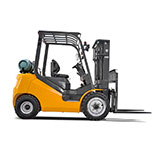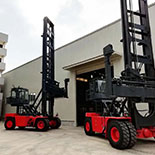



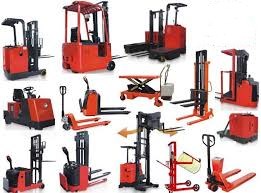
Second hand equipment / Used machines
The Benefits of Using and Purchasing Used Machinery
A Practical Guide for Buyers and Operators
Introduction
In an era where capital discipline, speed of delivery and operational efficiency decide the difference between profit and loss, the choice between buying brand-new machinery and acquiring well-maintained used equipment is one of the most important purchasing decisions a business can make. Too often, used machinery is dismissed as an inferior option — something you buy only when you cannot afford new. In reality, for a very large share of applications, used machinery is not a compromise. It is the smarter, more rational and often higher-return choice. This document explains, in plain terms and in detail, the many benefits of using and purchasing used machinery, from financial advantages to operational, logistical and environmental ones.
1. Significant Capital (CAPEX) Savings
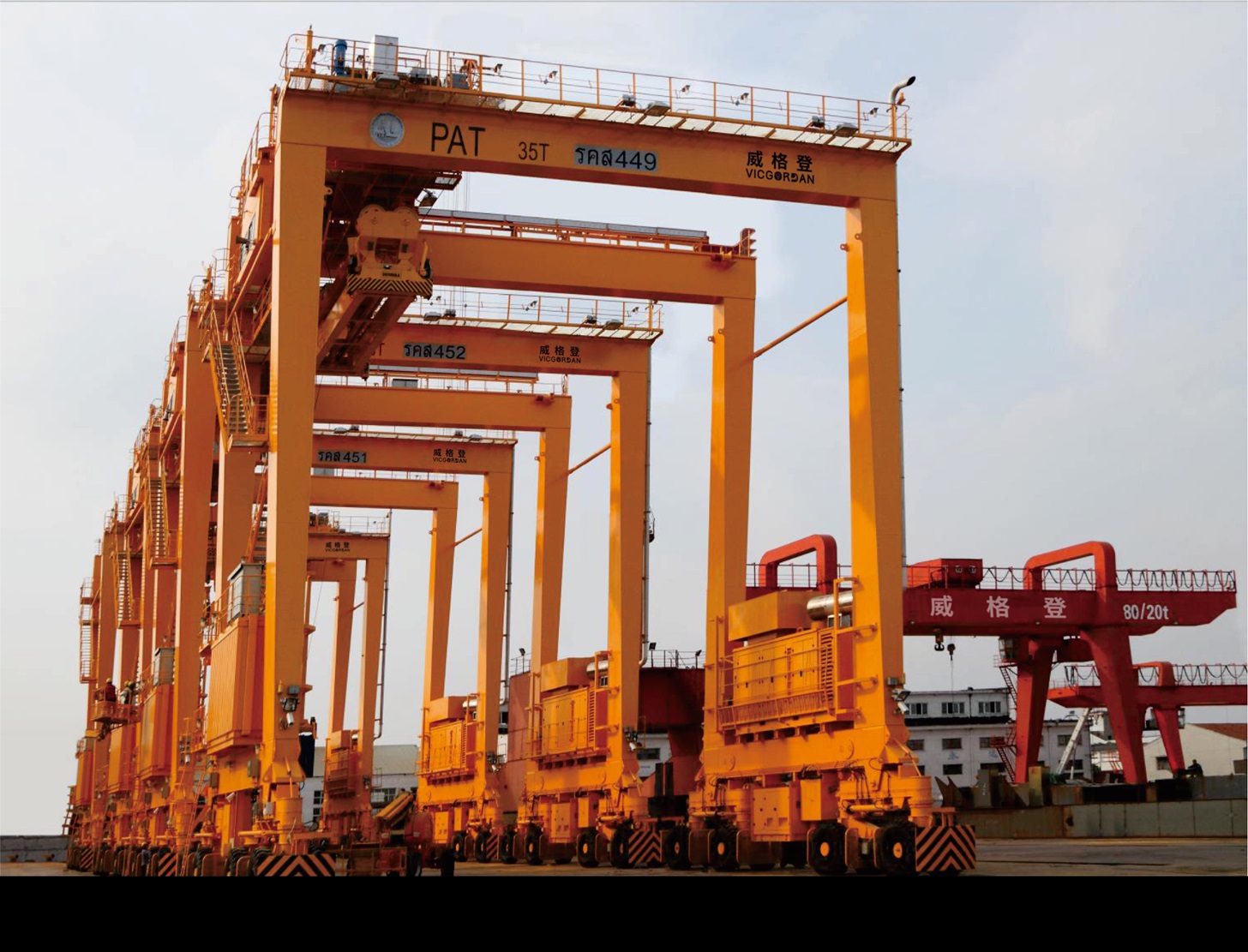
The most obvious and immediate benefit of used machinery is the lower purchase price. A used machine typically costs 30% to 60% less than its new equivalent, and in some categories — such as heavy port equipment, large diesel forklifts, ships, cranes and coal-washing machinery — the savings can be even greater, sometimes reaching 70% or more.
This price difference is not a reflection of poor quality. It mainly reflects the accounting rule of depreciation. A new machine loses a large portion of its value the moment it leaves the factory and is registered or commissioned. From that point onward, its market value is determined by its actual condition, working hours, maintenance history and remaining useful life — not by the sticker price of a brand-new unit. In other words, the heaviest part of the depreciation is absorbed by the first owner. The second buyer inherits the machine at a point where the value curve has flattened, meaning you pay far less for the same physical asset.
Practical impact:
You free up cash for other priorities — working capital, spare parts, staff, marketing or expansion.
You can afford a higher specification machine than a new one in the same budget.
You can acquire more units for the same investment, expanding capacity faster.
For an emerging-market buyer or a growing company, this saving can literally be the difference between being able to start an operation and not being able to.
2. Faster Return on Investment (ROI)
Because the initial cost is lower, the payback period of a used machine is dramatically shorter. The revenue a machine generates does not depend on whether it was bought new or used — a used forklift moves just as many tonnes per hour as a new one of the same capacity and condition. What changes is the cost base.
Example logic:
New machine: costs $200,000, generates $40,000 of net contribution per year → payback of 5 years.
Equivalent used machine in good condition: costs $90,000, generates $40,000 per year → payback of just over 2 years.
Over a five-year horizon, the used machine not only pays for itself faster but also starts contributing pure profit years earlier. For businesses where cash flow timing matters — which is nearly all businesses — this is decisive.
3. Slower Depreciation and Better Value Retention
New machinery depreciates rapidly in its first few years. A new unit can lose 20% to 30% of its value in the first year alone, and roughly half its value within three to five years. Used machinery, on the other hand, is already past the steepest part of the depreciation curve. Its value declines slowly and predictably.
This matters in two ways:
Lower hidden cost: the "cost" of owning a machine is not just its purchase price but also the value it loses while you own it. With used equipment, this annual loss is much smaller.
Better resale: when the time comes to upgrade or sell, a used machine retains a much higher percentage of what you paid. In many cases you can sell it for a meaningful portion of your original purchase, effectively lowering your true ownership cost to a modest "rental-like" figure.
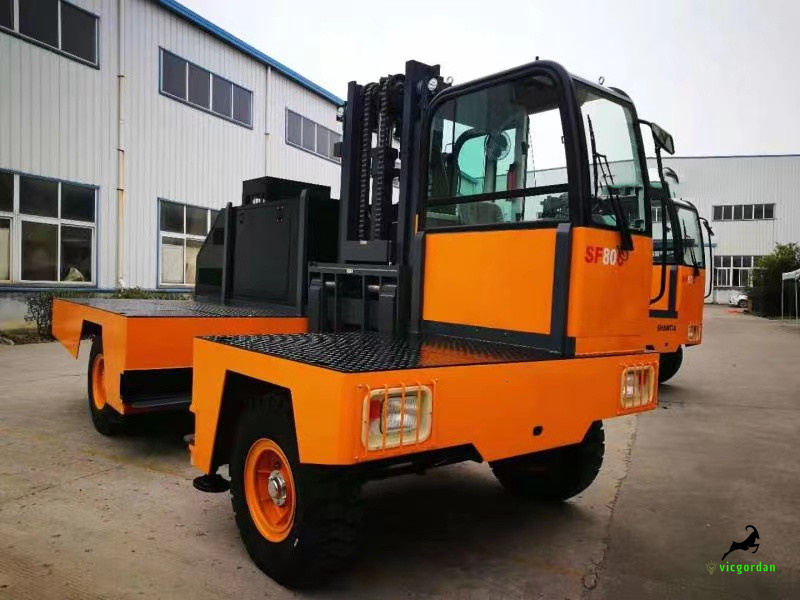
Well-maintained, popular models of diesel forklifts, cranes and loaders often hold strong residual value because demand for dependable second-hand units is consistently high.
4. Immediate Availability and Shorter Lead Time
Buying new machinery usually means waiting. Depending on the manufacturer, configuration and market conditions, delivery can take anywhere from several weeks to many months — sometimes over a year for ships, large cranes or custom-built port equipment.
Used machinery is, by definition, already manufactured and usually already in the market. A buyer can often inspect, purchase and ship the unit within days or a few weeks. This speed has enormous practical value:
Your project or contract starts on time, not delayed by factory lead times.
You can respond quickly to urgent capacity needs or seasonal demand spikes.
You avoid the risk that an ordered new machine arrives late, forcing you to rent expensive equipment in the meantime.
In industries where a stalled project costs money every single day, the difference between a 2-week and a 6-month wait is often more valuable than the price difference itself.
5. Proven, Real-World Reliability
A used machine is not a theoretical product. It has an operating history. This is a genuine advantage. A new machine has never been proven in the field — its reliability is only claimed by the manufacturer. A used machine, however, has demonstrated how it performs under real working conditions.
With a used machine you can know:
Actual working hours (engine hours).
The service and maintenance record.
Whether it has been used in harsh or normal conditions.
Its current condition, verified by inspection and testing.
This means fewer "unknowns." When you inspect a well-documented used machine, you are buying a known quantity. You can see, hear, test and even load-test the equipment before you pay. With new machinery, you are buying on trust in a brand.
For many professional buyers, the "known history" of a used machine is actually a stronger guarantee of predictable performance than the theoretical rating of a new one.
6. Ease of Maintenance and Spare-Parts Availability
This is one of the most underappreciated benefits of used machinery. Newer models often introduce new engines, electronic systems, emissions equipment and proprietary software. While technically advanced, these are:
More expensive to maintain.
Harder to repair without specialised technicians.
Dependent on manufacturer supply chains and software support.
More vulnerable to electronic faults and costly sensor failures.
Older, well-established models — the kind that make up the most reliable second-hand market — have decades of proven engineering and a vast installed base. Their parts are:
Widely available from multiple sources, not just the original manufacturer.
Cheaper, because production has long been standardised and aftermarket suppliers exist.
Compatible with the skills of ordinary mechanics, avoiding the need for specialised factory training.
In remote or developing locations — mining sites, ports, farms, construction projects — the ability to fix a machine locally with commonly available parts is often far more valuable than having the latest technology.
7. Lower Operating and Service Costs
Used machinery tends to be simpler, and simplicity translates directly into lower running costs. Consider the full cost of ownership:
Fuel and power: older well-tuned mechanical machines can be very economical when properly maintained; you choose models matched to your real workload rather than being forced into the latest, more expensive configuration.
Insurance and registration: in many jurisdictions, used equipment attracts lower insurance premiums and lower or reduced registration and tax burdens because its assessed value is lower.
Maintenance labour: fewer complex electronics means less specialised (and expensive) labour.
Spare parts: as noted above, parts for proven models are cheaper and easier to source.
When you calculate total cost of ownership — purchase price plus running costs over the machine's remaining life — used machinery frequently comes out ahead.
8. No "Technology Premium" You Do Not Need
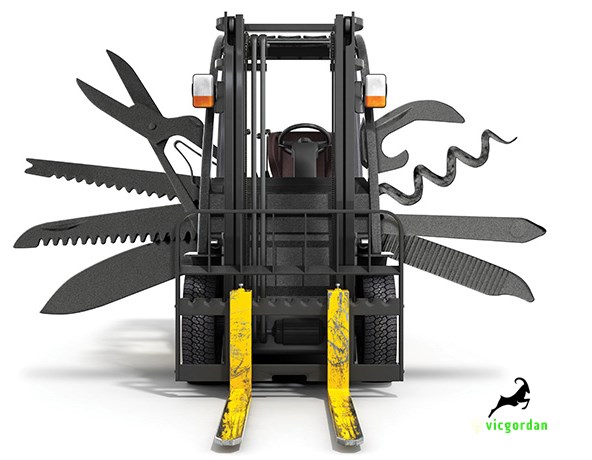
Manufacturers continuously add new features, digital controls, emission systems and automation. Each addition raises the price, but not every buyer needs every feature. For many practical operations — moving cargo, lifting loads, sieving coal, transporting goods — a solid, dependable mechanical machine does the job just as well as a high-tech one.
By buying used, you avoid paying the "technology premium" for functions your operation does not require. You pay for capability and reliability, not for marketing. In harsh environments with limited technical support, simpler and more robust equipment is often the genuinely superior engineering choice.
9. Flexibility to Match the Exact Machine to the Task
Purchasing new equipment often means accepting a standard catalogue configuration, or waiting for a custom build. The used market is vast and diverse. It offers:
A wider variety of brands, models, capacities, ages and specifications.
The opportunity to match a specific machine to a specific project or contract.
The ability to test different equipment before committing to a larger purchase.
Easy scaling — buying one unit now and another later as demand grows.
For traders and operators who run diverse jobs, this flexibility is a strategic advantage. You can maintain a versatile fleet that is closely matched to your actual workload, rather than being locked into a single expensive new purchase.
10. Environmental and Sustainability Benefits
Using and reusing machinery is a form of circular economy. Every piece of equipment that continues in productive service delays the need to manufacture a new one. This saves:
Raw materials such as steel, iron, aluminium and copper.
The enormous energy required to mine, smelt, refine and fabricate these materials.
The carbon emissions associated with manufacturing and global shipping of new machines.
Industrial landfill and scrapping pressure.
In practical terms, buying used and keeping equipment in service as long as it is safe and economical is one of the most effective ways a business can reduce its environmental footprint — without reducing output. Many companies now actively use "used and refurbished" as part of their sustainability reporting. Green procurement policies are increasingly happy with reused equipment because it demonstrably lowers carbon and material intensity.